
Most anachronistic enemies: The helmets and armor of the Mahdi and Moro Warriors
Preceding the First World War, two warrior groups clashed with modern Western armies. Those warriors were outfitted in what seemed like an anachronism even at the time.
In a brief period preceding the First World War, two fanatical warrior groups clashed with modern Western armies. Those warriors were outfitted in armor and helmets that likely seemed like an anachronism even at the time.
The Mahdi – The Islamic Knights and Warriors of the Sudan
Between 1896 and 1899, an Anglo-Egyptian military force took part in the conquest of the Sudan, which had been lost by the Khedives of Egypt more than a decade earlier during the Mahdist War. The campaign was initially slow going, but during the Battle of Omdurman, fought on Sept. 2, 1898, the British military won what might have been one of its most decisive victories of “Queen Victoria’s Little Wars.”
An Anglo-Egyptian force of around 25,000 men defeated a Mahdist army more than double its size. Armed with Maxim machine guns, modern rifles, and artillery, the British-led troops utterly destroyed their enemy. Less than 50 British and Egyptian soldiers were killed, and fewer than 400 were wounded. By contrast, 12,000 Mahdists were killed in the fighting, 13,000 were wounded, and another 5,000 captured.
It marked the end of the Madhdists, the extreme Islamic fanatics who called themselves “Ansar” but were also known by the British as “Dervishes.”
The odds were stacked against the Mahdist even before the battle began.
Although they were effectively led, well-disciplined, and highly motivated — factors that enabled them to defeat the poorly led Egyptian forces in the Mahdist War — this was less true as the Anglo-Egyptian forces advanced deeper into the Sudan. Few of the Sudanese troops carried modern rifles, which they had captured during previous engagements, and those that did lacked a sufficient supply of ammunition. Some had had muzzle-loading muskets/rifles, but most of the 52,000 “warriors” were armed with a straight-bladed sword known as a “kaskara,” while others had simple spears and axes.
Their faith and a belief that Allah was on their side were their primary weapon. Their triumph at the Battle of Khartoum in 1885 was seen as the fulfillment of their divine mission, but for the British, destroying the Mahdi Army at Omdurman was seen as retribution.
Unlike the British forces that marched into the Zulu War or the Mahdist War in scarlet tunics, the Anglo-Egyptian Army was a modern-looking army dressed in khaki, supported by river gunboats and the aforementioned machine guns!
By contrast, the Ansar donned chainmail armor and helmets that wouldn’t have seemed entirely out of place in the Crusades of the 12th century. Some of the armor may have been nearly that old, with scholars suggesting that Ottoman and Arab chain mail may have traveled to the region, carried by pilgrims returning from the Hajj in Mecca and Medina.
Sudan’s Knights Fought Modern “Crusaders”
The Sudanese mounted “knights” wore a round, Indo-Persian-style helmet, known as the “Kulah-Khud.” Whereas the Indo-Persian examples were often ornate in nature, the ones worn by the Mahdists were simpler in design and more crudely produced. The Sudanese mounted warriors were the main wearers of the helmets, with some having already been “vintage” or antique, as they were brought to the region, while the more rudimentary versions were likely copies made in the 1880s and 1890s.
Followers of the Mahdist movement initially rejected worldly status and social hierarchy; however, a new elite quickly emerged within the Mahdist State. Muhammad Ahmad, the self-proclaimed Mahdi, preached a return to the egalitarian values of early Islam. However, after his death, his successor created a new hierarchy based on tribal affiliation and loyalty to the regime. The new ruling class adopted its own status symbols. For example, inscriptions and embellishments were added to the jibba, the patched garment worn by followers, which was initially meant to symbolize a rejection of material wealth. In time, the added embellishments were added to denote rank and military division.
The helmets and swords were typical souvenirs of British soldiers, who were akin to early “militaria collectors,” yet, obtaining one could be a challenge. For years, Sudan had been under sanctions from the United States Treasury Department. All items of Sudanese origin were, in turn, banned by the Office of Foreign Assets Control (OFAC). That was lifted in 2017, but some restrictions still apply, including those on weapons, which could limit the ability to import a kaskara sword or spear.
The bigger issue is that few antique dealers in the Sudan are online and those that are won’t accept PayPal, so anyone trying to buy a Sudanese Mahdist helmet or armor should consider American and European auction houses instead.
The Moro Warriors of Maritime Southeast Asia
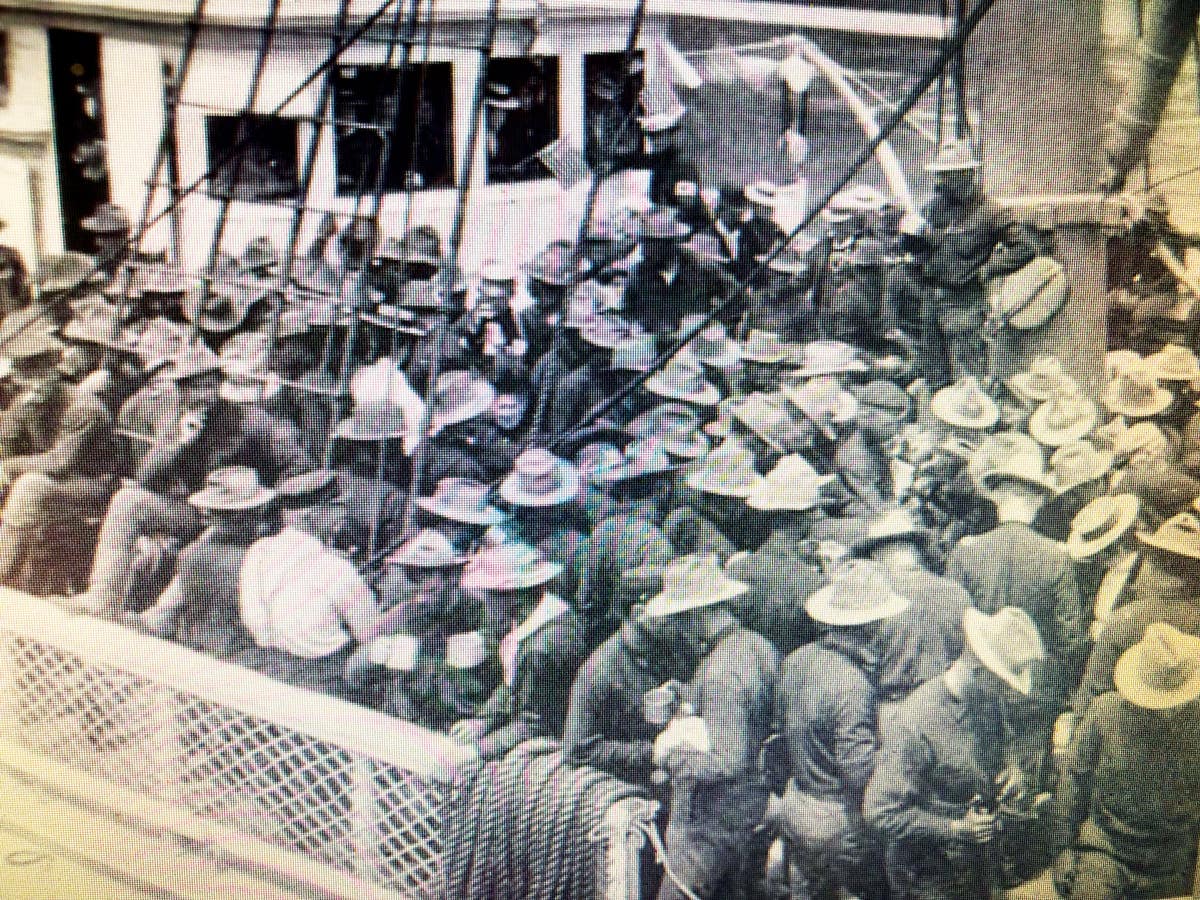
Just a few years after the Anglo-Egyptian Army defeated the Mahdi forces in the Sudan, thousands of miles away in the Philippines, the United States military faced a rebellion from another fanatical Islamic warrior group, the Moro of Mindanao and the Sulu Archipelago. The Muslim-majority ethnic group, also known as the Bangsamoro peoples, had resisted foreign rule for more than 300 years. The followers of Sunni Islam had carried out an often violent armed struggle against the Spanish.
The United States had taken control of the Philippines after its victory in the Spanish-American War, but soon came into armed conflict with Philippine nationalists who had attempted to proclaim independence. That led to the largely forgotten Philippine-American War, which lasted from February 1899 to July 1902. Even as it concluded, the Americans found themselves in a conflict with a much more determined enemy.
The Moro had already engaged in a “culture of jihad” against the Spanish and continued it with the United States. To suggest that the Moro warriors were unlike any enemy the United States had fought to that point would be an understatement. They wore armor with plates made of either black water buffalo horn or brass connected by butted brass mail, and donned Spanish-style helmets that seemed to be from the “conquistador era.” No doubt many U.S. Army soldiers underestimated the Moros, and that was a deadly mistake.
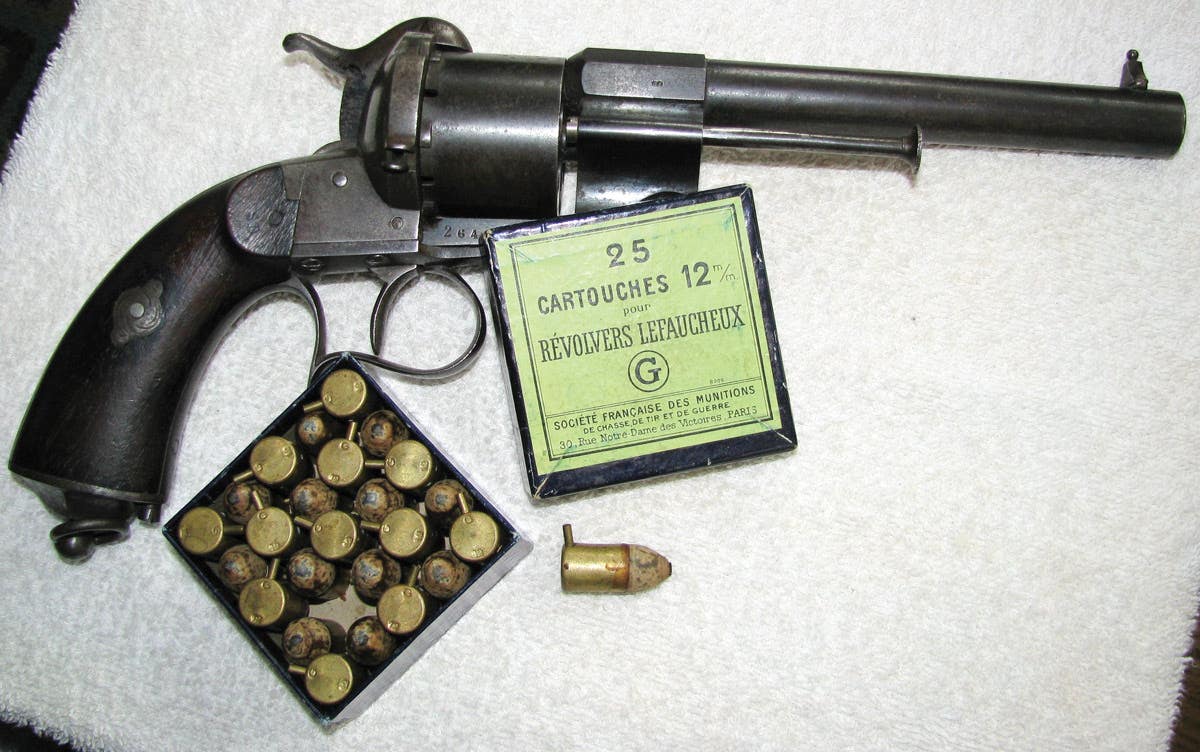
Despite adhering to the Muslim faith, the Moro warriors often took potent narcotics to inhibit the feeling of pain in battle, while the hallucinatory effects reportedly allowed the warriors to feel almost invincible. To drive home that point, there remains the tale of how the Colt M1892 .38 Long Colt Revolver, carried by American NCOs and officers, lacked the stopping power in close combat against these warriors.
The combination of the drugs, the armor, and their faith resulted in the Moro proving to be an adversary that no .38 round was going to take down. Stories abounded of U.S. officers and NCOs found dead with their throats cut next to a dead warrior who had taken six shots to the chest. It was likely an exaggeration, but the U.S. Army was already looking for an excuse to replace the M1892 revolver, and argued that it was apparent a new and more powerful cartridge was needed, as well as a new handgun to fire it. That led to the development of the Colt M1911 chambered for the .45 ACP cartridge.
Armored Warriors of the Jungle
Much like chain mail worn by the Ansar, the Moro armor and helmet made them seem like an enemy from another time. The spread of Islam also played a role in its adoption.
Chain mail and plate armor likely first arrived in the Philippines through traders from the Ottoman Empire, Persia, and the Mughal Empire, who also introduced their Islamic faith. The Moro subsequently maintained a long-standing cultural and religious connection to the Middle East through trade and missionaries. The local term for these armored vests was “Kurab-a-Kulang,” and it shares features with the “zirah bakhtar” chain mail armor worn in India during the 16th and 17th centuries.
Though it provided little protection against modern firearms (even the aforementioned .38 round could penetrate it at close range), the armor also indicated status among the Moro warriors. Armor worn by higher ranking warriors featured greater embellishments, including foliate designs, along with silver clasps and even gemstones set in some of the panels.
Although the armor arrived via the spread of Islam, the iconic helmets were the result of the arrival of the Spanish circa 1565 AD. Instead of adopting an Islamic style type of headgear, the Moro copied the design from the Spanish morion helmets worn by early explorers — no doubt adding confusion to antique dealers for decades due to the similarity between “morion” and “Moro.” Beyond their similar spelling and pronunciation, the helmets share a visual resemblance. The brass helmets are even described as a “Moro morion,” as well as by its indigenous name, “Badju,” while the armor is sometimes referred to as “Batju Lamina.”
A lesser-known style of helmet was the Ubab-a-hulu, also known as bungu/kapasiti. It was made of horn, leather, and water buffalo hair. Fewer of those versions are now encountered, likely due to their fragility, as well as their less aesthetically pleasing appearance compared to the brass morion-style helmets.
Original Moro helmets and armor are increasingly sought after, and as a result, they are now subject to Philippine laws regarding the export of antiques. Anything over 100 years old is generally prohibited from leaving the country without authorization from the Secretary of Agriculture and Natural Resources. Those interested in such items are best to look to reputable auctions and dealers in the United States.
The First Modern “Combat Helmets”
It would likely be a stretch to suggest the Mahdi “Kulah-Khud” or Moro “morion” style helmets could be seen as modern “combat helmets” in any sense of the word. Yet, their use does serve as a reminder that protective headgear was still in fashion alongside modern firearms and artillery. Arguably, it was for fashion reasons as much as for protection, but this further dispels any myths that Europeans (or Americans) lacked an understanding of helmets on the modern battlefield.
It is likely that against modern small arms and even cannons in the Sudan, and against similar weapons in the jungles of the Philippines, these antiquated helmets may have helped deflect a bullet or two, and each was likely reasonably effective against shrapnel. Some of those veterans who fought in the colonial conflicts against those anachronistic adversaries may have later donned a “tin hat” in the trenches of the Western Front.

Peter Suciu is a freelance journalist and when he isn't writing about militaria you can find him covering topics such as cybersecurity, social media and streaming TV services for Forbes, TechNewsWorld and ClearanceJobs. He is the author of several books on military hats and helmets including the 2019 title, A Gallery of Military Headdress. Email him and he'd happily sell you a copy!