Deutschnationler Handlungsgehilfen-Verband: DHV — a Nazi Party trade union for Aryans only
The “Deutscher Handlungsgehufen-Verband”,” (German Association of Commercial Employees) was formed in Hamburg in 1893. On January 1st, 1896, its name was changed to the “Deutschnationler Handlungsgehilfen-Verba.”
Chris William
Adolf Hitler’s “Nationalsozialistische Deutsche Arbeiterpartei” (NSDAP – Nazi Party) grew to millions of followers during the chaotic Weimar period, relying heavily on recruiting members from the German working class. At the same time, other smaller groups continued to vie for political and workplace power in Germany, with some achieving noteworthy degrees of success.
Workers’ groups (with strong political connections) had historically fought for recognition and bargaining power going back to the time of the Imperial German Empire. Hundreds of local and national assemblies pushed their specific agendas in the factories, meeting rooms, beer halls and streets of the often conflicted and increasingly unstable German economy. Members fought for a variety of causes, such as strengthening the craft guilds, improving the perceived workers’ rights under Communism or Democracy, raising wage rates, promoting safer working conditions, and many other issues they felt needed to be addressed. In an era when industry had overtaken agriculture as the major driving force in the German economy, and the barons of commerce worried more about their sales and costs then their employees, the social and economic conditions of the average working German faced growing perils. In response to the concerns of the wholesale trade, an organization was founded to protect the interests of Germany’s commercial workers and demand their fair share of their industry’s profits.
The “Deutscher Handlungsgehufen-Verband”,” (German Association of Commercial Employees) was formed in Hamburg in 1893. On January 1st, 1896, its name was changed to the “Deutschnationler Handlungsgehilfen-Verband” (German National Association of Commercial Employees – DHV) in order to present a more wide-ranging impression. The main objectives of this new “white collar” trade union were to raise workers’ wages, ensure old age benefits, offer health and death insurance, provide loan accessibility, reduce working hours, increase safety at job sites, advance personnel training and address many of the other work-related difficulties shared by their membership.
What made the DHV different from other free trade unions (and caused many to refuse giving it the title of a “union”) was its practice of excluding potential new members due to ethnicity, race or gender. This varied greatly from many of the other workers’ groups that took a more open approach, and welcomed almost anyone to join in their causes. With a strong stance on antisocialism and antisemitism, the DHV barred any Jews from joining its ranks. In addition, the DHV was strongly anti-Democratic, anti-Republican, anti-liberal and anti-Social Democrat (one of the oldest and largest political parties in the Weimar Republic of the 1920s and ’30s). As the group was fervently anti-feminist, the DHV dictated that females should be restricted in the workforce, and women were not allowed to join their group.
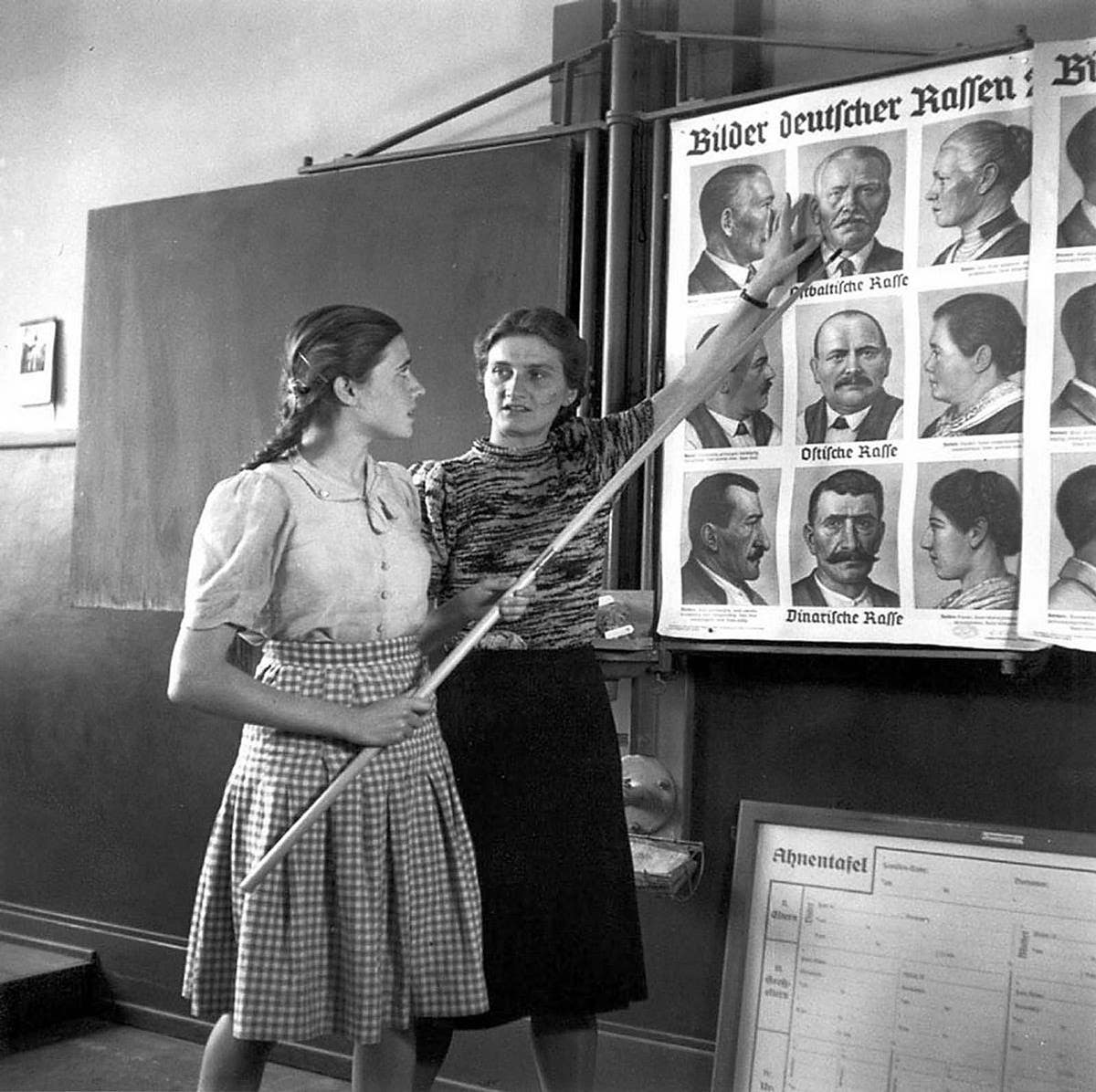
Its overly patriotic, radically nationalistic and pro-fascist beliefs paralleled those of the German “Volkisch” movement. The Volkisch adherents embraced the concept of a country with a single “Volkskorper” (ethnic body), working to mandate the ideals of German “Blut und Boden” (blood and soil – promoting a racially homogenous nation within an expanded territorial community). All those outside of the movement, especially Jewish people, were not considered part of the citizenry and therefore, “alien” in nature. All in all, those in the Volkisch movement and similar groups, longing for a return to the more idyllic “good old days”, were people with diverse sets of beliefs that rose to join against the modern changing world.
Following the loss of their historic national identity after losing the “War to End All Wars” and dealing with the growing economic deprivations of the great depression, Germans in all walks began to lose faith in their government and traditional social organizations. These institutions were felt to no longer represent the citizens’ best interests, nor protect them from violence and economic woes. Professionals of the commercial merchant forces found some refuge in the DHV, which promised stability in their jobs and a solid bulwark against the continued failures of the weak Weimar government. The DHV also prolonged and promoted the anti-socialism and antisemitism which prevailed in most nationalistic groups after the “stab in the back” conspiracies that followed the Great War. For these and other reasons, membership grew steadily in the DHV from 160,000 members in 1914, to more than 400,000 members by 1932. As Hitler’s NSDAP continued to gain momentum, the DHV members actively supported the Nazi Party since it shared many of their same basic beliefs.
This backing of the NSDAP, in conjunction with the support from many other like-minded groups within the Weimar Republic, helped lead to Hitler’s chancellorship in 1933. Once the Nazis were in power, the DHV was made a part of the “Deutsche Arbeitsfront” (DAF – the umbrella organization for all trade unions). When later reorganizing the DAF in 1934 to gain total control over all the German trade unions, Hitler dissolved the DHV, leaving its former members represented by the larger state-sponsored workers’ front organization, until the end of the Third Reich.
Author’s note: Martin Zorn, born in 1904, was a dairy product salesman from Bad-Mergenthelm. To help promote his career he joined the DHV, and eventually became a life member. In 1937, he entered the NSDAP, as many of his fellow DHV members had done. As the war approached in 1939, Zorn followed the German tradition of military service and volunteered for Hitler’s growing army. By 1941, he had been promoted to the rank of non-commissioned officer, and awarded the “Kriegsverdienstkreuz” (War Merit Cross) for exemplary service. Zorn would survive the war and return to his prior career, a veteran of Hitler’s devastating lost cause.
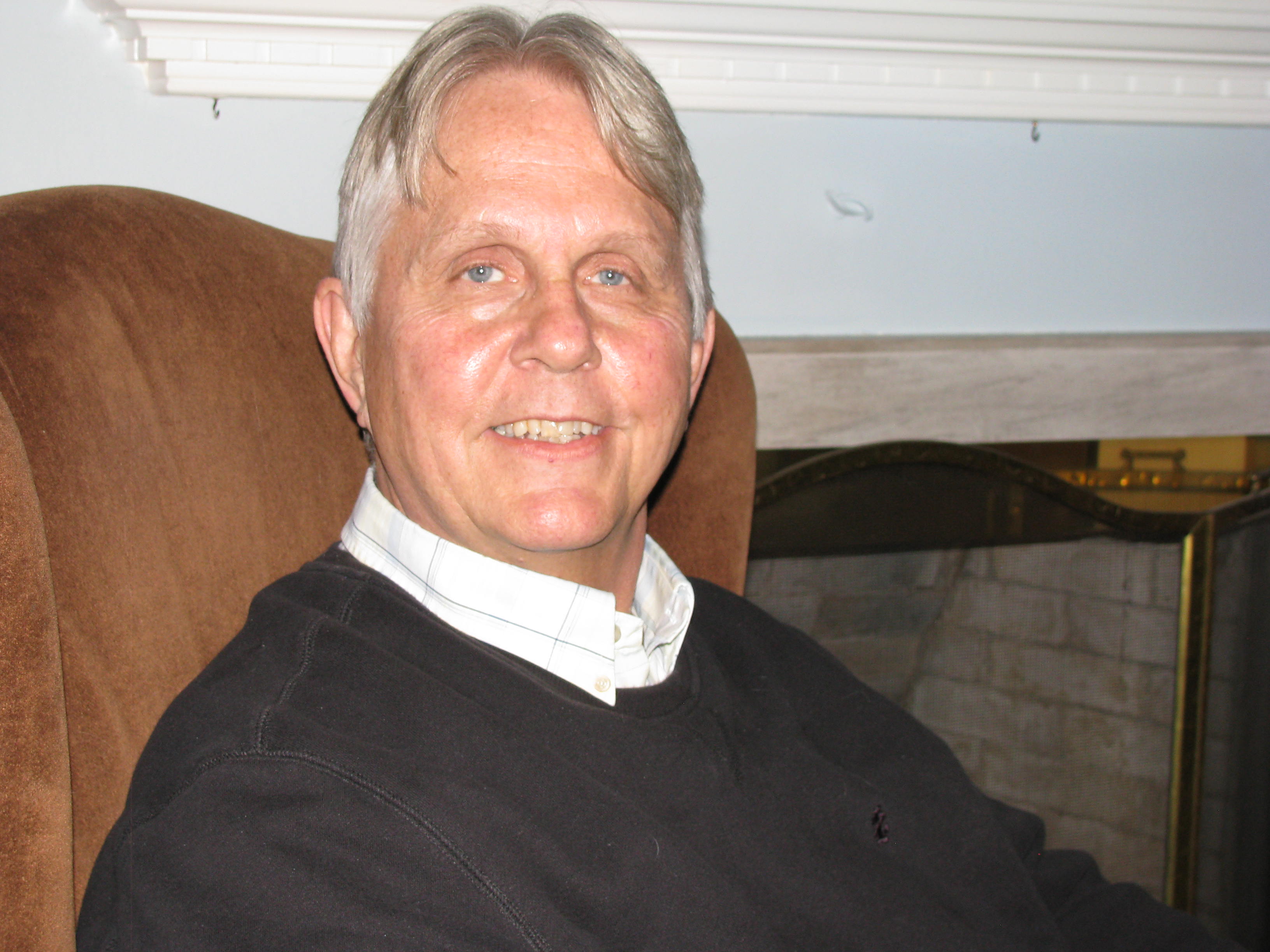
Chris William has been a long-time member of the collecting community, contributor to Military Trader, and author of the book, Third Reich Collectibles: Identification and Price Guide.
"I love to learn new facts about the world wars, and have had the good fortune to know many veterans and collectors over the years."
"Please keep their history alive to pass on to future generations".