

Break it up, and put it back together: militaria collecting
Among militaria collectors a sore spot is the topic of breaking up of groupings. Should it be?
Among collectors, it is rare for there ever to be a consensus on anything. About the closest thing to an exception to that rule is the breaking up of groupings. Most collectors will argue that a “grouping,” as in all the items belonging to a single individual, should never, ever be broken up.
Some collectors will argue that it preserves the history and tells a more complete story.
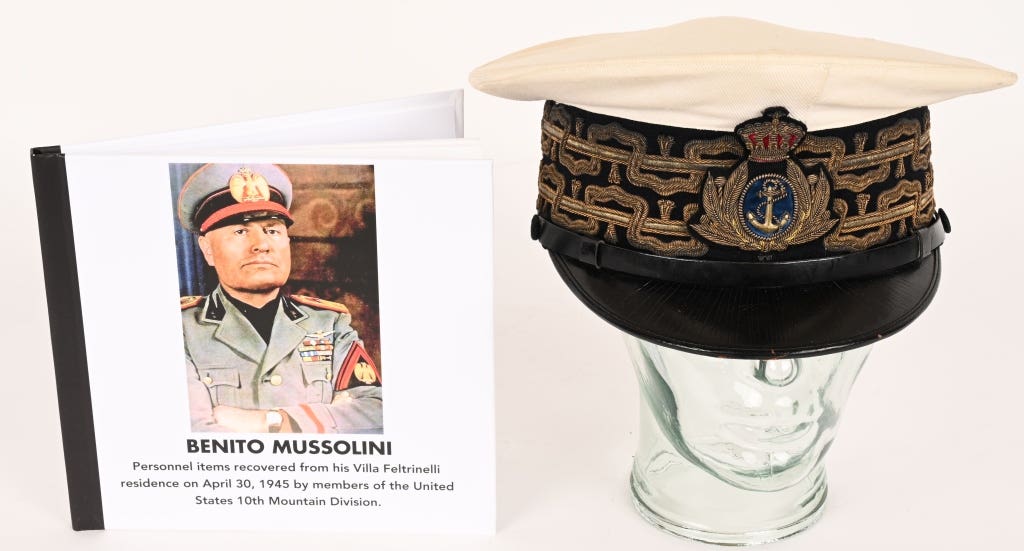
Yet there is also the issue of what a helmet collector is supposed to do when buying a particular noteworthy helmet that comes with a bunch of medals? Likewise, does the medal collector even want the helmet? Can such a group be granted an amicable separation, one that can track the other items?
Keeping groupings together can become an issue when the group is enormous. Who has the money or room for someone’s footlocker, multiple uniforms, medals, hats and helmet, photographs, field gear, and other items? This is a hypothetical, because we rarely see groups so complete. But the point remains, nonetheless.
I’m not a collector of medals, and the only ones I have on display are those belonging to my great-uncle. I’ve kept his items together and plan to pass them down to my nephew, who I hope will keep the group together. I realize that, even among these items, at some point in the future, they will just be items belonging to some distant ancestor no one remembers. I can’t worry about whether this grouping will be broken up in the future; instead, I have to concentrate on today.
Of the few named items I have in my collection, I’ve tried to find out as much as I can about the person. This documentation can fill in the gaps in the history. However, this still doesn’t address whether we can always appreciate items we don’t collect. For example, I have a medal that was supposedly issued to the original owner of a helmet. But how am I to know this is really the case? There is no name on the medal, so should I bother keeping this grouping together, and should it even be considered a grouping?
Grouped together
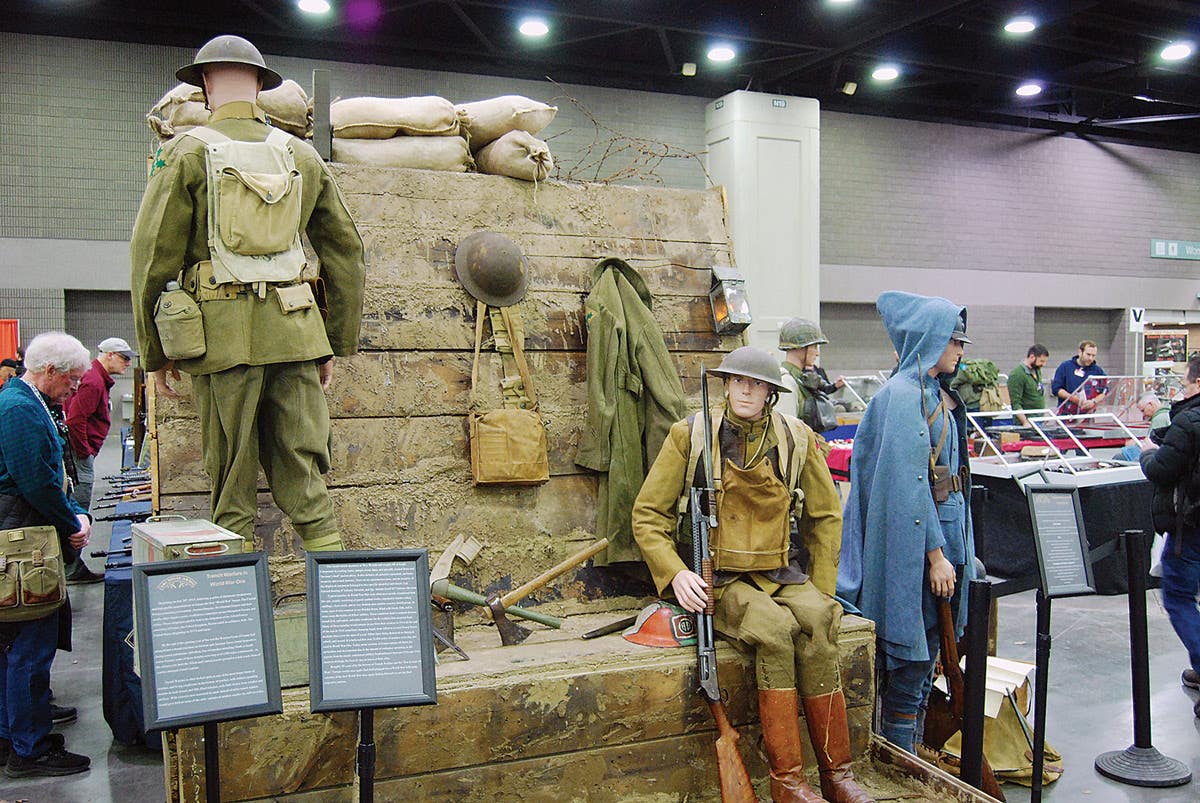
This brings me to another point. As a collector, I’ve pieced together quite a few uniforms over the years. That has meant buying a tunic or jacket, later finding the correct pants, boots to the era, belt, accoutrements, gear, and equipment, etc.
I’ve “completed” the display, but is that now a grouping? I’ve tried to document that the items were pieced together, but I can see in the future that someone could offer this as if it were all originally belonging to one person, when that isn’t the case.
What if I made a mistake, or some of the items are incorrect? That is, I might have the wrong pattern boots with a particular uniform display, or I added a visor cap to go with that officer’s tunic. Will this confuse matters? Could a future collector/researcher believe these were items issued to a soldier, and therefore that the unit wore those pattern boots? The cap may suggest the individual had a small head, even as the tunic implied he had broad shoulders. This is where the chain of custody could become even more critical. We can hope someone would say, “A collector in the past put these together,” but an unscrupulous seller could just as easily suggest, “This came straight from the family!”
Am I making too much of this? Yes, probably.
Someone might also notice something I missed in my vintage uniforms, even if I tried to get it right. Moreover, is a modern grouping still worthy of the name? Or should we worry when piecing together modern uniform displays?
Do my 2005-dated ammo boots with my 1990-dated Welsh Guard uniform ruin the display? What about the white buff belt that is from 1985? Or that the bearskin cap is from 1998? Someday, this uniform could go to another collector, and it should be obvious it is pieced together, but that’s only apparent if you look at the date stamps inside. Maybe it doesn’t matter because it’s from the “modern era,” but everything from today will be “vintage” in the future.
You own it, you decide
And the dilemma about breaking up collections isn’t limited to just militaria. Sports card collectors like to have complete teams for particular years. When those collections are sold, they are often broken up. The reason is that others are trying to complete their collections and may only need a handful of cards.
Even those with very deep pockets may want only particular pieces of artwork by a noted artist and may simply not appreciate others. Who can afford one, let alone several, Van Gogh paintings? Should we expect a complete collection of every pattern Enfield rifle to remain together forever?
This brings us to the point that collections are broken up.
In 2016, a collection of items belonging to Manfred von Richthofen (aka “the Red Baron”) was sold at auction. The items included more than 300 items, everything from photographs and letters to a lock of his hair. Arguably, that was a grouping of an individual, just a very famous one.
Unless a buyer had Elon Musk money, there was no way for that collection to stay together. But should it have?
We think it is a sin that Grandpa’s grouping could be broken up, yet the items belonging to the Red Baron are now in the hands of dozens, possibly even hundreds, of collectors. Are the items diminished? Perhaps, but each person may now cherish the items they acquired. Isn’t that why we collect in the first place?
Like what Peter Suciu has to say? Here are a few more articles for your reading enjoyment.

Peter Suciu is a freelance journalist and when he isn't writing about militaria you can find him covering topics such as cybersecurity, social media and streaming TV services for Forbes, TechNewsWorld and ClearanceJobs. He is the author of several books on military hats and helmets including the 2019 title, A Gallery of Military Headdress. Email him and he'd happily sell you a copy!